
Memoirs of POW experience
Memoirs of POW experience
Memoirs of POW experience: enhancing public understanding of diversity in, and the functionalities of, military life writing through performance
Project overview
In May 2025 the UK marked the 80th anniversary of VE Day – the end of World War Two in Europe – in spectacular fashion. Among the commemorative activities across the country were a speech by King Charles III to mark the anniversary of his grandfather King George VI’s address, services of thanksgiving at Westminster Abbey, and a 23-aircraft flypast by the Red Arrows.
Meanwhile, in West Yorkshire two researchers from the University of Leeds took a powerful and innovative lecture-performance on tour to give audiences a moving insight into the experiences of a Greek Cypriot sergeant who became a British Army prisoner of war in the 1940s.
The project – Memoirs of a P.O.W. – was funded by the University’s Impact Acceleration Account, conceived by Professor Christiana Gregoriou (School of English) and adapted and directed by Professor George Rodosthenous (School of Performance and Cultural Industries). Tailored for all audiences, including school pupils, the unique performance explored themes of resilience, camaraderie, and survival in wartime. It combined academic insight with vivid storytelling and included a 30-minute monologue which drew on a never-before-seen memoir written by Gregoriou’s grandfather, Phylactis Aristokleous.
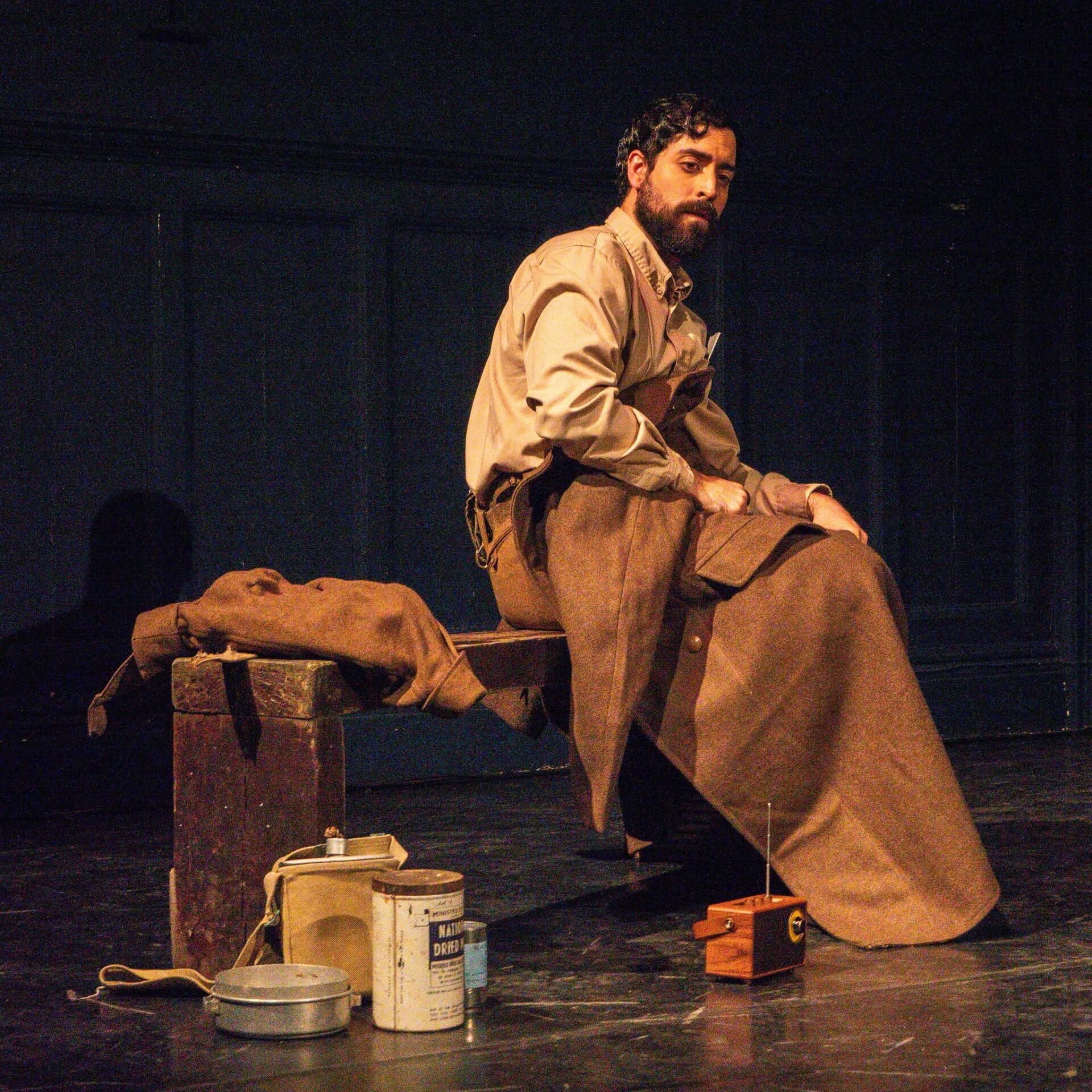
Actor Stylianos Thomadakis as Phylactis Aristokleous. Photo credit. George Othonos
“This project has been deeply personal for me,” Professor Gregoriou says. “Adapting my grandfather’s memoir for the stage has been a way of honouring his story, while opening up conversations about the diversity of Britain’s wartime forces and the emotional truths captured in life writing. It’s been humbling to see how audiences have connected with the performance, especially younger viewers encountering this history for the first time.”
After selecting, translating, scripting, and theatrically adapting stories from Aristokleous’ memoir, which was then directed into a monologue by Professor Rodosthenous, the project team auditioned a range of actors and eventually cast Stylianos Thomadakis in the lead role. The production then toured a range of Yorkshire venues, including the University of Leeds, a Greek school in the city, the Royal Armouries, Eden Camp in Malton, and the York Army Museum. Additional funding also enabled a further show at London’s Theatro Technis in July 2025 as part of Cyprus Week. In total, the project team delivered 14 lecture performances across six venues, reaching 570 people, including primary and secondary school aged children.
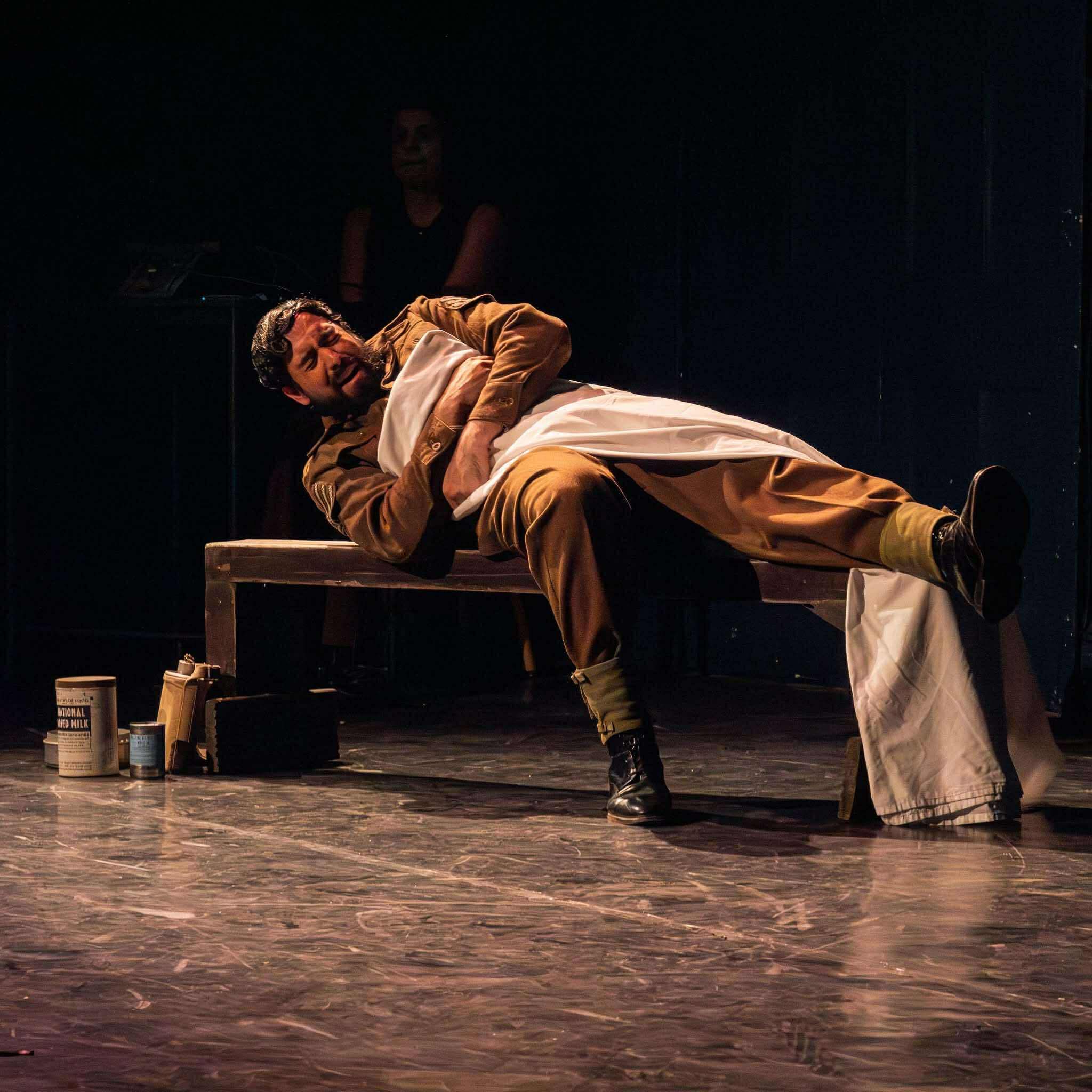
Actor Stylianos Thomadakis as Phylactis Aristokleous. Photo credit: George Othonos
"Above all,” Professor Rodosthenous says, “this was a story about theatre, the performances we stage to stay alive and the roles we inhabit to endure. When prisoners staged The Merchant of Venice under German supervision, they turned propaganda into subversion, those same costumes later used to smuggle men to freedom. The Cypriot Karagiozis’ puppet show, born of cardboard and desperation, decolonises the Stalag’s narrative and becomes an act of cultural resistance, injecting dark humour and defiance into a space designed to erase identity.
“Music was the heartbeat of this production, functioning as both memory and rebellion. Phylactis’s favourite song, Marlene Dietrich's "Lili Marleen", whistled years after captivity. echoes through the play, a thread between past and present, trauma and survival. The soundscape juxtaposes German love songs with the screech of bullets, because captivity exists in these contradictions: beauty and brutality, hope and despair."
In written feedback provided to the project team, audiences praised the performance for its effectiveness in weaving together historical context with intimate personal narrative, with many describing it as “mesmerising,” “enlightening”, “thought-provoking” and “deeply moving”.
The Cultural Counsellor of the Cyprus High Commission, Marios Theocharous, attended two of the Leeds performances and co-funded and co-hosted the London show. “It was truly a privilege to support this important project and welcome it to Theatro Technis, where it touched hearts and resonated deeply with the Greek Cypriot diaspora,” he said. “The story of Phylactis Aristokleous reminded us of how urgent it is to remember, honour, and share the lived experiences of a generation that is no longer with us. I sincerely hope the journey of Memoirs of a P.O.W. continues — these stories deserve to be heard far and wide.”
By showcasing the story of a Cypriot soldier, Memoirs of a P.O.W. also contributed to a wider public understanding of the diversity within Britain’s wartime forces. A teacher who attended the show with their students confirmed that this tied in with what they had been learning in class. “The introduction about the different nationalities being involved in the war was really pertinent as we had discussed this at school. Coming from an area of Leeds that is not particularly diverse, it is useful for the children to see different representations.” Teachers everywhere can now access educational material related to the project on the MyLearning platform, with the resources being most suitable for Key Stages 3–4, in History, English, Citizenship and PSHE.
Memoirs of a P.O.W. is part of Professor Gregoriou’s wider research into Second World War life-writing and the ways in which memoirs record and reconstitute the subjective experience of war.

Photo credit: George Othonos.
“The most cynical of us may argue that life is chaotic, futile and devoid of meaning, but what these memoirs, and my grandfather, may teach us is that we can craft ourselves a narrative to help make sense of it,” Professor Gregoriou says.
“Perhaps most importantly, this multicultural veteran community serves as a powerful reminder that, despite the global conflict they endured, it was through diverse nations uniting across ethnic lines, that they were able to defend their freedom, lives and livelihoods from those who sought to destroy them.”
The 30-minute monologue was translated from Greek by Maria Iole Karolidou and performed by Stylianos Thomadakis.
Project team
Professor Christiana Gregoriou (School of English)
Professor George Rodosthenous (School of Performance and Cultural Industries)
Second World War Experience Centre [SWWEC]
Eden Camp Modern History Museum
Royal Armouries Museum, Leeds

Phylactis Aristokleous. Image copyright Christiana Gregorious, reproduced with permission.
Performance Venues
Christiana Gregoriou and George Rodosthenous present 'Memoirs of a P.O.W' - a dramatisation of a British Army Second World War memoir commemorating the 80th anniversary of Victory in Europe Day.
Watch Memoirs of a P.O.W
You can now watch a recording of the Memoirs of a P.O.W lecture performance.